
Buildplate
A buildplate was an augmented-reality building space in Minecraft Earth that supported both creative and survival modes.
Overview and Placement
In Minecraft Earth, a buildplate served as the primary area where players constructed structures. It functioned mainly as the creative mode component of the game, though a survival mode option was also available. To use one, a player needed a flat surface and an open area in the real world to project the buildplate onto their camera view.
Once placed, players could physically walk around the buildplate to view it from different angles and build structures. They were also able to interact directly with the blocks, items, and mobs placed within the buildplate area.
Obtaining Buildplates
Every new player started with a default 8×8 buildplate. As players gained experience and increased their level, they unlocked larger buildplates up to 32×32 in size. A unique buildplate was awarded upon reaching levels 1, 5, 10, 15, 20, and 25.
In addition to level rewards, players could purchase extra buildplates from the in-game store using rubies. The store offered many themed options covering different environments, such as jungle themes (Giant Jungle, Heart Of The Jungle, Jungle Treehouse, Lava In The Jungle) and sandy areas (Endless Desert, Not A Sandcastle, Sand Sanctuary, Sandy Peril). Other store templates featured buildings and dwellings like Cluck House, Colourful Cottage, Hearth Home, Highland House, Jollys Lodge, Relax in this Igloo, Roadside Inn, Sleepy Village, and Witch's Mansion.
Players could also buy nature and terrain-focused buildplates from the store. These included forest and mushroom settings (Dark And Shroomy, Mystery Canopy, Mystery Forest, Toadstool Terrace, Wide Woods), cold or elevated landscapes (Highland Grazing, Terrace Lookout, Tremendous Tundra), and water or underground areas (Midnight bayou, Secluded Mine, There’s A Dock!, Tiny Waterfall Ahoy). The remaining purchasable designs were A Bit Fancy, Ambitious Expedition, Bovine Quiet Time, Chill Spot, Grassy Pasture, Gritty Grandeur, Lone Sheep Road, Night Is Coming, Rangers Rest, Starting Small, The Warren, and Where the chickens go.
Scale and Game Modes
Buildplates operated in two distinct scales: default scale for creative building and full scale for survival gameplay. In default creative scale, an 8×8 buildplate appeared as a 58-centimeter (23-inch) square at a 1:14 scale. A larger 32×32 buildplate appeared at about 50 centimeters (20 inches) per side, which corresponded to a 1:64 scale.
Before placing a buildplate, players could choose to deploy it at full scale, which switched the gameplay to survival mode. In this mode, which behaved similarly to an adventure, players only had access to the items in their configured hotbar, could take burn damage from lava, and were attacked by hostile mobs. If a player entered a shared buildplate at full scale, they had to use a locked hotbar provided by the buildplate's owner.
Multiplayer
Buildplates supported local multiplayer collaboration. The owner of a placed buildplate could select the "Invite Friend" option to generate a QR code. Other players could then scan this code to join the session and build together.
More from the archive
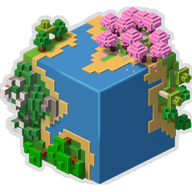
The Store was an in-game marketplace in Minecraft Earth where players could purchase buildplates, boosts, and rubies.
A map location in Minecraft Earth where players entered survival-mode buildplates to fight mobs, mine rare resources, and collect rewards.
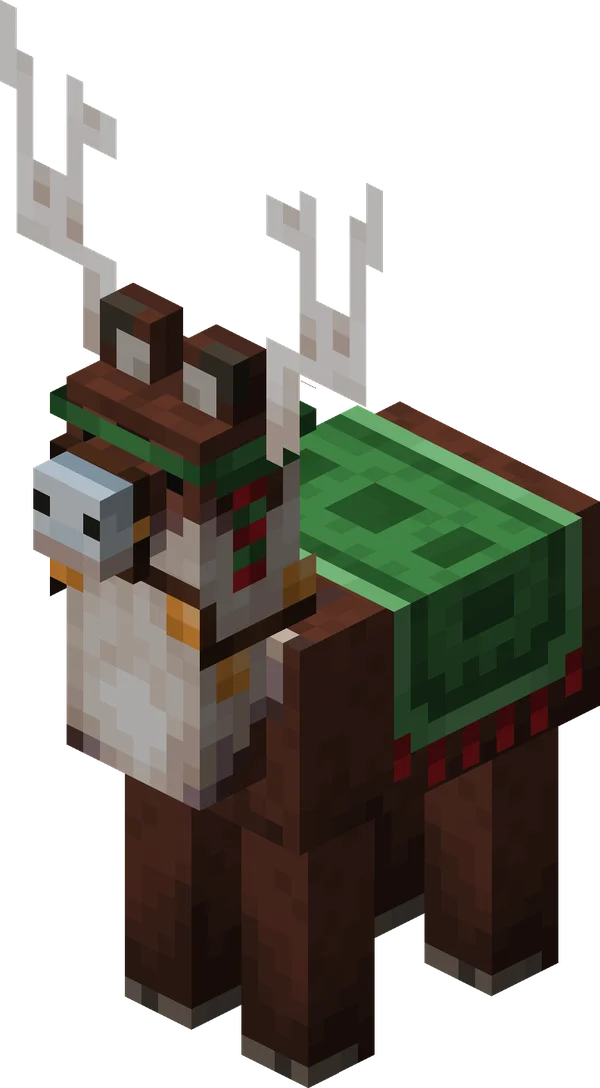
The Jolly Llama was a rare, festive variant of the llama in Minecraft Earth that wore antlers, golden bells, and a decorated green carpet.
Animals were a classification of mobs in Minecraft Earth inspired by real-world or mythical creatures.
Aquatic was a classification in Minecraft Earth for mobs that inhabited oceans and rivers.
Boosts were temporary enhancements to player abilities in Minecraft Earth that could be bought with rubies or activated via physical figurines.
Challenges were in-game tasks in Minecraft Earth that guided players through game features while rewarding experience and rubies.
Body customization options in the Character Creator allowed players to adjust their avatar's base skin, hair, face, limbs, and overall size.